Would you like to switch to the accessible version of this site?

Go to accessible site Close modal window

Don't need the accessible version of this site?

Hide the accessibility button Close modal window
Accessibility View Close toolbar
Murphy Eye Clinic

318-687-3708

Open mobile navigation
  • Home
  • New Patient Center
    • Online Forms
  • Eyecare Services
    • Contact Lens Exams
    • Eye & Vision Exams
    • Lasik Eye Surgery
    • Eye Surgery
    • Hard to Fit Contacts
    • Vision Therapy FAQs
    • Computer Vision
    • Sunglasses
  • WALMART Vision FAQs
  • Frame Selection
  • Insurance Info
  • About Us
    • Meet The Optometrist
    • Meet The Staff
  • Contact Us
  • Community Content
    • Common Eye Conditions
      • Age-Related
      • Cognitive and Acquired
      • Vision Impairment
      • Injury & Irritation
      • Eye Lids
      • Changes in Appearance
    • Contact Lenses
    • Eye Diseases
    • Eyeglasses
      • Eyeglass Lenses
    • Eye Symptoms
    • How the Eyes Work
      • Basic Visual Skills
    • Pediatric Vision
    • Protecting Your Eyes
    • Visual Rehabilitation
    • Vision Problems
    • What is Vision Therapy
    • Vision Therapy Programs
    • We Can Help With
      • Cataracts
      • Corneal Disorders
        • Disorders
      • Glaucoma
      • Refractive Disorders
      • Adult Strabismus
      • Retinal Disorders
    • Newsletters
      • Glasses & Frames
      • Contacts
      • Tips for Healthy Eyes
      • Conditions That Affect Vision
      • Kid's Vision
      • Amazing, Interesting Eyes
      • Medical Perspectives
  • Home >
  • Articles >
  • Newsletters >
  • April Newsletter: What Causes Yellow Eyes and How Are They Treated?

April Newsletter: What Causes Yellow Eyes and How Are They Treated?

  • Created in Newsletters

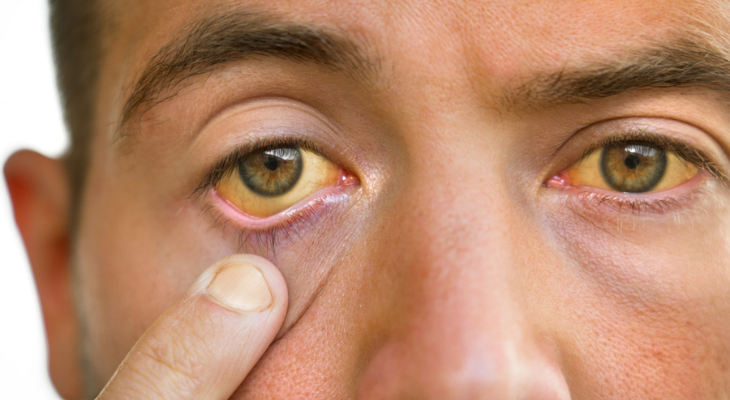
Man shows off his yellowed eyes.

Common Causes of Yellow Eyes

It's only natural to be concerned if you've noticed that the sclera, the white part of your eye, has become yellow. Yellow eyes can be a sign of an underlying health condition and warrant a visit to the optometrist.

What Does the Sclera Do?

The sclera is a tough connective tissue that covers most of the eye. It protects the inner eye from injury and helps your eyeball keep its round shape. Although the sclera is normally white, several diseases and conditions can make it look yellow.

Is Part of Your Sclera Yellow? You May Have a Pinguecula

Pingueculae are yellowish growths on the sclera that can develop if you spend a lot of time outdoors without wearing sunglasses that block ultraviolet (UV) light or are exposed to wind or dust. Although pingueculae are harmless, they can turn into larger growths called pterygia.

Jaundice Could Be to Blame if Your Entire Sclera Is Yellow

Jaundice might be the reason that the whites of your eyes are yellow. The condition affects people of all ages but is particularly common in newborn babies. Jaundice occurs in about 60% of newborns, according to the March of Dimes.

An excess amount of bilirubin causes your eyes to take on a yellow hue if you're jaundiced. Bilirubin is a yellow pigment that forms when old red blood cells are broken down in the liver. The cells then leave the body in your urine and feces. If the liver doesn't do a good job of removing the old cells or removes them too slowly, your eyes may appear yellow due to the bilirubin buildup.

Common jaundice causes include:

  • Gallstones. Gallstones form when bile, a digestive fluid, hardens into stones. Bile is made by the liver and stored in the gallbladder. If the gallstones block the bile ducts between the liver and gallbladder, bilirubin collects in your bloodstream and may eventually turn the whites of your eyes yellow. Gallstones that move into the bile ducts are called bile duct stones. These stones were responsible for 92% of jaundice cases in a study of adults 45 and older with jaundice, according to a cohort study published in Family Practice.
  • Hepatitis. Hepatitis inflames the liver, making it harder for the organ to do its job. The infection can occur if you've been infected by the hepatitis A, B, or C virus, but can also happen due to heavy alcohol use, toxins, or use of some medications, like steroids or penicillin.
  • Parasites. It's not a pleasant thought, but an invasion of parasites could be responsible for the change in your appearance. Jaundice can occur if roundworms block your bile ducts or liver flukes.
  • Cirrhosis. Alcohol-associated cirrhosis or non-alcoholic fatty liver disease could kill cells in your liver and replace them with scar tissue, affecting the normal function of the liver.
  • Birth Defects. Some people develop jaundice due to a birth defect or condition that affects the body's ability to break down bilirubin. Diseases that can increase the risk of jaundice include Dubin-Johnson syndrome, Crigler-Najjar syndrome and Gilbert Syndrome.
  • Pregnancy. In some cases, pregnancy hormones can slow bile flow in the gallbladder and cause jaundice.
  • Cancer. A cancerous tumor in the liver, pancreas, gallbladder, or bile ducts may interfere with the normal flow of bile, causing bilirubin to accumulate in your bloodstream.
  • Other Causes. Yellow eyes due to jaundice can also occur if you have malaria, hemolytic anemia, an autoimmune disorder, or pancreatitis.

What Are the Treatments for Yellow Eyes?

Treatments for yellow eyes vary depending on the cause. Pingueculae or pterygia usually aren't removed unless they interfere with vision or are unsightly. Newborns with jaundice are treated with special lights that help their bodies break down and remove excess bilirubin. Jaundice is usually a temporary problem that improves as the baby's liver becomes more adept at processing blood cells.

If your optometrist suspects that your yellow eyes are related to jaundice, you'll be referred to a general practitioner. Treating underlying conditions, like hepatitis, gallstones, pancreatitis, anemia, or parasites, can return your eyes to their normal color. Blood tests or other types of tests, like computed tomography (CT) or magnetic resonance imaging (MRI) will help your doctor determine the cause of your yellow eyes.

Are you worried about a change in the appearance of your eyes? Contact our office to schedule an appointment with the optometrist.

Sources:

March of Dimes: Newborn Jaundice, 1/2024

https://www.marchofdimes.org/find-support/topics/planning-baby/newborn-jaundice

Family Practice: Jaundice in Primary Care: a Cohort Study of Adults Aged >45 Years Using Electronic Medical Records, 8/2012

https://academic.oup.com/fampra/article/29/4/416/493323

American Academy of Ophthalmology: Why Are the Whites of My Eyes Discolored, 3/9/2022

https://www.aao.org/eye-health/tips-prevention/discolored-sclera-whites-of-my-eyes-turn-yellow

WebMD: Yellow Eyes, 5/11/2022

https://www.webmd.com/a-to-z-guides/causes-of-yellow-eyes

Merck Manual: Jaundice in Adults, 1/2023

https://www.merckmanuals.com/home/liver-and-gallbladder-disorders/manifestations-of-liver-disease/jaundice-in-adults

  • Common Eye Conditions
    • Age-Related
    • Cognitive and Acquired
    • Vision Impairment
    • Injury & Irritation
    • Eye Lids
    • Changes in Appearance
  • Contact Lenses
  • Eye Diseases
  • Eyeglasses
    • Eyeglass Lenses
  • Eye Symptoms
  • How the Eyes Work
    • Basic Visual Skills
  • Pediatric Vision
  • Protecting Your Eyes
  • Visual Rehabilitation
  • Vision Problems
  • What is Vision Therapy
  • Vision Therapy Programs
  • We Can Help With
    • Cataracts
    • Corneal Disorders
      • Disorders
    • Glaucoma
    • Refractive Disorders
    • Adult Strabismus
    • Retinal Disorders
  • Newsletters
    • Glasses & Frames
    • Contacts
    • Tips for Healthy Eyes
    • Conditions That Affect Vision
    • Kid's Vision
    • Amazing, Interesting Eyes
    • Medical Perspectives

All patients receive 20% OFF on second complete pair of eye glasses.

Error!

    Featured Links

    Click to find out more

    • Services

      We strive to provide complete care for our patients. Learn more about all the services we provide.
    • Make An Appointment

      We will do our best to accommodate your busy schedule. Schedule an appointment today!
    • Online Forms

      Our patient forms are available online so they can be completed in the convenience of your own home or office.

    Hours of Operation

    Our Regular Schedule

    Monday:

    9:00 am-5:00 pm

    Tuesday:

    9:00 am-5:00 pm

    Wednesday:

    9:00 am-5:00 pm

    Thursday:

    9:00 am-5:00 pm

    Friday:

    9:00 am-5:00 pm

    Saturday:

    Closed

    Sunday:

    Closed

    Locations

    Find us on the map

    Testimonials

    Reviews From Our Satisfied Patients

      We use Anderson Optometry for all of our family’s vision needs. Recently, we had to have our youngest fitted for new glasses and he made the experience fun for her and informative for us. We know Dr. Anderson will always take good care of our family’s eye care and that’s why we wouldn’t go to anywhere else.

      The Harrison Family

      Dr. Anderson and his staff are so patient and friendly. Dr. Anderson prescribed me glasses and I had the toughest time picking out frames. They didn’t rush, but instead made helpful suggestions and now I have an awesome pair of frames, not to mention the fact that I can see ten times better than before. You guys are the best!

      Shelly

      I’ve been going to Dr. Anderson for over five years now and even though I only see him once a year for my annual exam, he and his staff always make me feel very welcome and take care of all my eye care needs. Anderson Optometry is the best at what they do and make you feel right at home.

      Anthony

    Featured Articles

    Read up on informative topics

      March Newsletter: Top Signs You Need to See an Optometrist

      Do you need to make an appointment with the eye doctor? ...

      Read More

      March Newsletter: How Dehydration Affects Your Eye Health

      Do you know how dehydration affects your eyes? ...

      Read More

      February Newsletter: How to Prepare for an Eye Exam

      Are you ready for your eye exam? ...

      Read More

      February Newsletter: What are Eye Floaters and When Should You Seek Treatment?

      Do you know when eye floaters need treatment? ...

      Read More

      January Newsletter: Why You Should Not Ignore Dry Eye Symptoms

      Are your eyes dry? Find out why you shouldn't overlook your symptoms. ...

      Read More

      January Newsletter: How the 20-20-20 Rule Can Reduce Eye Strain

      Struggling with eye strain? This simple rule can help. ...

      Read More

      December Newsletter: The Best Contact Lenses for Dry Eyes

      Need to find more comfortable contacts for your dry eyes? Take a look at these options. ...

      Read More

      December Newsletter: Daily Habits That Affect Your Vision

      Could your daily habits harm your eyesight? ...

      Read More

      November Newsletter: Why It's Important to Have an Extra Pair of Eyeglasses or Contact Lenses

      Do you have an extra pair of eyeglasses or contact lenses? ...

      Read More

      November Newsletter: The Advantages of Rimless Eyeglasses

      Are rimless eyeglasses right for you? ...

      Read More

    Newsletter Signup

    Sign up for more articles

    Error!

      Social Media

      • Copyright © 2026 MH Sub I, LLC dba iMatrix.
      • Admin Log In