Would you like to switch to the accessible version of this site?

Go to accessible site Close modal window

Don't need the accessible version of this site?

Hide the accessibility button Close modal window
Accessibility View Close toolbar
Murphy Eye Clinic

318-687-3708

Open mobile navigation
  • Home
  • New Patient Center
    • Online Forms
  • Eyecare Services
    • Contact Lens Exams
    • Eye & Vision Exams
    • Lasik Eye Surgery
    • Eye Surgery
    • Hard to Fit Contacts
    • Vision Therapy FAQs
    • Computer Vision
    • Sunglasses
  • WALMART Vision FAQs
  • Frame Selection
  • Insurance Info
  • About Us
    • Meet The Optometrist
    • Meet The Staff
  • Contact Us
  • Community Content
    • Common Eye Conditions
      • Age-Related
      • Cognitive and Acquired
      • Vision Impairment
      • Injury & Irritation
      • Eye Lids
      • Changes in Appearance
    • Contact Lenses
    • Eye Diseases
    • Eyeglasses
      • Eyeglass Lenses
    • Eye Symptoms
    • How the Eyes Work
      • Basic Visual Skills
    • Pediatric Vision
    • Protecting Your Eyes
    • Visual Rehabilitation
    • Vision Problems
    • What is Vision Therapy
    • Vision Therapy Programs
    • We Can Help With
      • Cataracts
      • Corneal Disorders
        • Disorders
      • Glaucoma
      • Refractive Disorders
      • Adult Strabismus
      • Retinal Disorders
    • Newsletters
      • Glasses & Frames
      • Contacts
      • Tips for Healthy Eyes
      • Conditions That Affect Vision
      • Kid's Vision
      • Amazing, Interesting Eyes
      • Medical Perspectives
  • Home >
  • Articles >
  • Newsletters >
  • Premature Babies and Vision Problems

Premature Babies and Vision Problems

  • Created in Newsletters
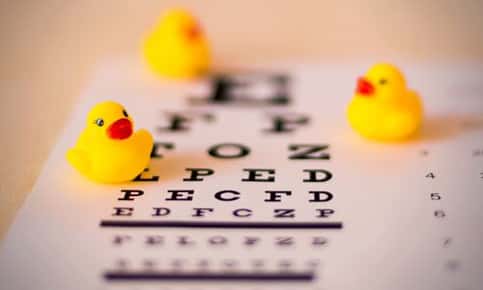
eye chart duck toys

Being born too early can have a profound effect on your child's health. In addition to early concerns about lung development and intestinal issues, prematurity may also cause vision problems. Despite vision complications, many children who were born prematurely do have usable vision, thanks to early interventions. These six eye diseases and conditions may occur in babies born prematurely.

Retinopathy of prematurity (ROP)

ROP primarily affects babies that weigh less than 2 3/4 pounds and are born before 31 weeks' gestation, according to the National Eye Institute (NEI). The disease occurs when abnormal blood vessels grow in the retina and interfere with normal vision. The retina is the light-sensing layer that lines the back of the eye and sends light impulses to the brain, where they're converted into images.

In some cases, the abnormal blood vessels leak, making vision even worse. Scar tissue formation can also affect vision and may cause the retina to detach from the back of the eye in the most severe form of the disease. Retinal detachment may result in partial or complete blindness if treatment isn't successful.

Fortunately, 90 percent of babies who have ROP develop normal vision and never need any type of treatment. Every year, 1,110 to 1,500 babies are born with a severe form of the disease that does requires treatment, reports the NEI.

Babies who had breathing problems, seizures, infections, heart disease, anemia or other health problems, or required blood transfusions or mechanical ventilation are at increased risk of developing the disease. In the past, babies who received high levels of oxygen in the neonatal intensive care unit were more likely to develop ROP. Today, oxygen levels are more closely monitored to reduce the risk.

ROP treatment stops or slows the growth of abnormal blood vessels by destroying the outer edges of the retina with lasers or cryotherapy (freezing). Because the outer portions of the retina are responsible for peripheral vision, your child will lose a little side vision after treatment.

Other treatments for ROP include vitrectomy, a procedure that replaces the gel inside the eye with saline solution, and a scleral buckle, a silicone band placed around the white part of your child's eyes. Both treatments can help prevent retinal detachments.

Myopia

Children who are born early may be more likely to develop myopia, or nearsightedness. The condition occurs when your child can see near objects more clearly than objects in the distance. Prescription eyeglasses and contact lenses offer a very effective way to correct your child's vision. Convincing young children to wear eyeglasses may sound like a difficult task, but many babies and toddlers don't object to the glasses when they notice the improvement in their vision.

Strabismus

Strabismus, commonly called "crossed eyes" may cause an eye to turn down, up or to either side. Not surprisingly, misalignment of the eyes can make it much more difficult for your child to see properly. Treatment options for strabismus include patching the stronger eye, eyeglasses, prism lenses or surgery on the muscles that control eye movement.

Ambylopia

Ambylopia, or "lazy eye," often develops in conjunction with strabismus. If your child has ambylopia, vision in the eye is turned off, due to a problem with the connection between the brain and the eye. Diagnosing and treating ambylopia at young age can help your child avoid permanent vision loss. Common ambylopia treatments include patching, vision therapy and eyeglasses or drops that blur vision in the "good" eye, forcing the "bad" eye to become stronger.

Cataracts

Prematurity may also increase your child's risk of developing cataracts. Although cataracts most often occur in older people, they can be present at birth or develop during childhood. Cataracts occur when the normally clear lens located behind your child's iris becomes cloudy. Although cataracts don't interfere with vision when they're small, they can cause blurred vision as they grow and interfere with the connection between the brain and the eye. If your child has cataracts, he or she may be more likely to also develop ambylopia. Glasses or contact lenses may help improve your child's vision initially, but surgery is usually recommended if the cataract is large.

Loss of Peripheral Vision

Peripheral vision loss is an unfortunate consequence of laser treatment or cryotherapy used to preserve central vision. Children who have lost some side vision may benefit from prisms lenses that slightly expand their field of view and low vision aids that help them make the most of their vision.

Regular visits to your eye care specialist are particularly important if your child has a vision problem related to prematurity. If it's been a while since we've seen your son or daughter, or he or she is complaining about difficulty seeing, contact us to schedule an appointment.

Sources:

National Eye Institute: Facts About Retinopathy of Prematurity, 6/14

https://nei.nih.gov/health/rop/rop

National Eye Institute: Facts About Retinopathy of Prematurity, 6/14

https://nei.nih.gov/health/rop/rop

March of Dimes: Retinopathy of Prematurity

https://www.marchofdimes.org/complications/retinopathy-of-prematurity.aspx

Review of Optometry: A Clinical Guide of Retinopathy of Prematurity, 12/06

https://www.reviewofoptometry.com/article/a-clinical-guide-to-retinopathy-of-prematurity

MedScape: Visual Problems in Infancy, 8/15/11

https://www.medscape.com/viewarticle/747775

  • Common Eye Conditions
    • Age-Related
    • Cognitive and Acquired
    • Vision Impairment
    • Injury & Irritation
    • Eye Lids
    • Changes in Appearance
  • Contact Lenses
  • Eye Diseases
  • Eyeglasses
    • Eyeglass Lenses
  • Eye Symptoms
  • How the Eyes Work
    • Basic Visual Skills
  • Pediatric Vision
  • Protecting Your Eyes
  • Visual Rehabilitation
  • Vision Problems
  • What is Vision Therapy
  • Vision Therapy Programs
  • We Can Help With
    • Cataracts
    • Corneal Disorders
      • Disorders
    • Glaucoma
    • Refractive Disorders
    • Adult Strabismus
    • Retinal Disorders
  • Newsletters
    • Glasses & Frames
    • Contacts
    • Tips for Healthy Eyes
    • Conditions That Affect Vision
    • Kid's Vision
    • Amazing, Interesting Eyes
    • Medical Perspectives

All patients receive 20% OFF on second complete pair of eye glasses.

Error!

    Featured Links

    Click to find out more

    • Services

      We strive to provide complete care for our patients. Learn more about all the services we provide.
    • Make An Appointment

      We will do our best to accommodate your busy schedule. Schedule an appointment today!
    • Online Forms

      Our patient forms are available online so they can be completed in the convenience of your own home or office.

    Hours of Operation

    Our Regular Schedule

    Monday:

    9:00 am-5:00 pm

    Tuesday:

    9:00 am-5:00 pm

    Wednesday:

    9:00 am-5:00 pm

    Thursday:

    9:00 am-5:00 pm

    Friday:

    9:00 am-5:00 pm

    Saturday:

    Closed

    Sunday:

    Closed

    Locations

    Find us on the map

    Testimonials

    Reviews From Our Satisfied Patients

      We use Anderson Optometry for all of our family’s vision needs. Recently, we had to have our youngest fitted for new glasses and he made the experience fun for her and informative for us. We know Dr. Anderson will always take good care of our family’s eye care and that’s why we wouldn’t go to anywhere else.

      The Harrison Family

      Dr. Anderson and his staff are so patient and friendly. Dr. Anderson prescribed me glasses and I had the toughest time picking out frames. They didn’t rush, but instead made helpful suggestions and now I have an awesome pair of frames, not to mention the fact that I can see ten times better than before. You guys are the best!

      Shelly

      I’ve been going to Dr. Anderson for over five years now and even though I only see him once a year for my annual exam, he and his staff always make me feel very welcome and take care of all my eye care needs. Anderson Optometry is the best at what they do and make you feel right at home.

      Anthony

    Featured Articles

    Read up on informative topics

      March Newsletter: Top Signs You Need to See an Optometrist

      Do you need to make an appointment with the eye doctor? ...

      Read More

      March Newsletter: How Dehydration Affects Your Eye Health

      Do you know how dehydration affects your eyes? ...

      Read More

      February Newsletter: How to Prepare for an Eye Exam

      Are you ready for your eye exam? ...

      Read More

      February Newsletter: What are Eye Floaters and When Should You Seek Treatment?

      Do you know when eye floaters need treatment? ...

      Read More

      January Newsletter: Why You Should Not Ignore Dry Eye Symptoms

      Are your eyes dry? Find out why you shouldn't overlook your symptoms. ...

      Read More

      January Newsletter: How the 20-20-20 Rule Can Reduce Eye Strain

      Struggling with eye strain? This simple rule can help. ...

      Read More

      December Newsletter: The Best Contact Lenses for Dry Eyes

      Need to find more comfortable contacts for your dry eyes? Take a look at these options. ...

      Read More

      December Newsletter: Daily Habits That Affect Your Vision

      Could your daily habits harm your eyesight? ...

      Read More

      November Newsletter: Why It's Important to Have an Extra Pair of Eyeglasses or Contact Lenses

      Do you have an extra pair of eyeglasses or contact lenses? ...

      Read More

      November Newsletter: The Advantages of Rimless Eyeglasses

      Are rimless eyeglasses right for you? ...

      Read More

    Newsletter Signup

    Sign up for more articles

    Error!

      Social Media

      • Copyright © 2026 MH Sub I, LLC dba iMatrix.
      • Admin Log In