Would you like to switch to the accessible version of this site?

Go to accessible site Close modal window

Don't need the accessible version of this site?

Hide the accessibility button Close modal window
Accessibility View Close toolbar
Murphy Eye Clinic

318-687-3708

Open mobile navigation
  • Home
  • New Patient Center
    • Online Forms
  • Eyecare Services
    • Contact Lens Exams
    • Eye & Vision Exams
    • Lasik Eye Surgery
    • Eye Surgery
    • Hard to Fit Contacts
    • Vision Therapy FAQs
    • Computer Vision
    • Sunglasses
  • WALMART Vision FAQs
  • Frame Selection
  • Insurance Info
  • About Us
    • Meet The Optometrist
    • Meet The Staff
  • Contact Us
  • Community Content
    • Common Eye Conditions
      • Age-Related
      • Cognitive and Acquired
      • Vision Impairment
      • Injury & Irritation
      • Eye Lids
      • Changes in Appearance
    • Contact Lenses
    • Eye Diseases
    • Eyeglasses
      • Eyeglass Lenses
    • Eye Symptoms
    • How the Eyes Work
      • Basic Visual Skills
    • Pediatric Vision
    • Protecting Your Eyes
    • Visual Rehabilitation
    • Vision Problems
    • What is Vision Therapy
    • Vision Therapy Programs
    • We Can Help With
      • Cataracts
      • Corneal Disorders
        • Disorders
      • Glaucoma
      • Refractive Disorders
      • Adult Strabismus
      • Retinal Disorders
    • Newsletters
      • Glasses & Frames
      • Contacts
      • Tips for Healthy Eyes
      • Conditions That Affect Vision
      • Kid's Vision
      • Amazing, Interesting Eyes
      • Medical Perspectives
  • Home >
  • Articles >
  • How the Eyes Work >
  • Technology and Vision

Technology and Vision

  • Created in How the Eyes Work

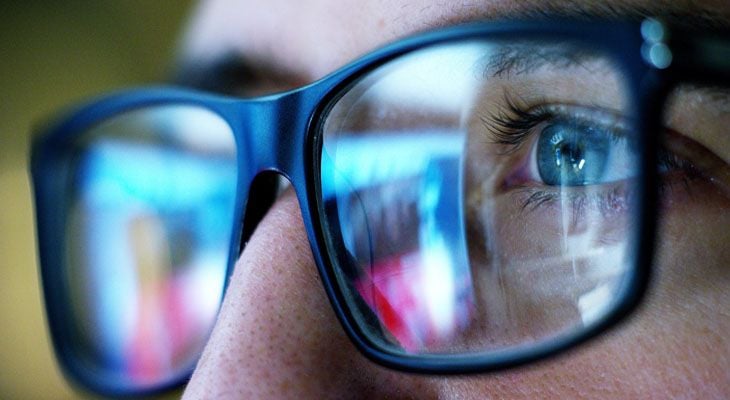
Man with glasses looking at computer

The primary sufferers of technology-related eyestrain used to be adults whose work involved computers. Now, however, people of all ages use computers, smartphones, tablets and gaming devices, which can take their toll on the eyes. As people’s reliance on technology grows, so does the incidence of eyestrain. Keep reading to learn more about digital eyestrain and how you can protect your eyes in the digital age.

How Much Screen Time Is Too Much?

After two hours of screen time, the eyes typically begin to get tired and suffer from digital eyestrain. Additional contributing factors to developing eyestrain include small print, devices held at non-ergonomic angles too far from eyes and the blue light emitted from digital screens. People who wear glasses or contacts are even likelier to strain their eyes, as their prescriptions might not be ideal for mid-range viewing of electronics.

Screens and Blinking

When going about their day, the average person blinks approximately 18 times per minute. However, staring at a screen slows the blink rate. This can lead to itchy, dry and burning eyes. Office workers with computer-related jobs may even undergo physiological changes to their eyes that are similar to those experienced by people who suffer from dry eye disorder.

Age-Related Trends

People of different ages tend to use technology differently. The Vision Council, which represents optical industry suppliers and manufacturers, analyzed these differences in its 2015 report on digital eyestrain. The council determined that Millennials (individuals born between 1981 and 1996) and members of Generation X (individuals born between 1965 and 1980) are the most likely to strain their eyes due to screen overuse. Sixty percent of Millennials and nearly one-third of Gen Xers spent nine or more hours per day looking at a screen. Only 26 percent of Baby Boomers (individuals born between 1946 and1964) are as glued to digital technology as the aforementioned generations. About 63 percent of Gen Xers and 68 percent of Millennials reported symptoms of digital eyestrain.

Protect Your Eyes

Despite the rise of digital eyestrain, most people are not about to give up their smartphones and tablets. So how do you protect yourself? Here are a few ways:

  • Tweak your lighting. Turn down your ambient lighting when looking at screens, and avoid fluorescent tube lighting. Windows should be to the side of your computer, rather than directly in front or behind it.
  • Pick the right display. Liquid crystal displays (LCDs) with flat panels are better than cathode ray tube (CRT) monitors. If you are still using a flickering CRT display, it is time to upgrade. Go for a larger screen with high resolution.
  • Adjust your computer’s display settings. Brightness should be about the same as that of your surrounding area. Use the “view” menu to zoom in and make text bigger without changing the font size. Reduce the color temperature to reduce blue light. Microsoft Windows users will find display settings in the control panel. Apple users should look in systems preferences.
  • Take breaks. Blink. Look off into the distance. Better yet, get up and walk around.
  • Get regular eye exams. Your eye doctor is your ally in avoiding digital eyestrain. Discuss your computer use, how far you sit from the screen and what other devices, such as tablets and smartphones, you typically use.

Call us today. We’ll set up your next comprehensive eye exam to help determine ways you can protect your eyes against digital eyestrain and other factors that may affect your eye health.

  • Common Eye Conditions
    • Age-Related
    • Cognitive and Acquired
    • Vision Impairment
    • Injury & Irritation
    • Eye Lids
    • Changes in Appearance
  • Contact Lenses
  • Eye Diseases
  • Eyeglasses
    • Eyeglass Lenses
  • Eye Symptoms
  • How the Eyes Work
    • Basic Visual Skills
  • Pediatric Vision
  • Protecting Your Eyes
  • Visual Rehabilitation
  • Vision Problems
  • What is Vision Therapy
  • Vision Therapy Programs
  • We Can Help With
    • Cataracts
    • Corneal Disorders
      • Disorders
    • Glaucoma
    • Refractive Disorders
    • Adult Strabismus
    • Retinal Disorders
  • Newsletters
    • Glasses & Frames
    • Contacts
    • Tips for Healthy Eyes
    • Conditions That Affect Vision
    • Kid's Vision
    • Amazing, Interesting Eyes
    • Medical Perspectives

All patients receive 20% OFF on second complete pair of eye glasses.

Error!

    Featured Links

    Click to find out more

    • Services

      We strive to provide complete care for our patients. Learn more about all the services we provide.
    • Make An Appointment

      We will do our best to accommodate your busy schedule. Schedule an appointment today!
    • Online Forms

      Our patient forms are available online so they can be completed in the convenience of your own home or office.

    Hours of Operation

    Our Regular Schedule

    Monday:

    9:00 am-5:00 pm

    Tuesday:

    9:00 am-5:00 pm

    Wednesday:

    9:00 am-5:00 pm

    Thursday:

    9:00 am-5:00 pm

    Friday:

    9:00 am-5:00 pm

    Saturday:

    Closed

    Sunday:

    Closed

    Locations

    Find us on the map

    Testimonials

    Reviews From Our Satisfied Patients

      We use Anderson Optometry for all of our family’s vision needs. Recently, we had to have our youngest fitted for new glasses and he made the experience fun for her and informative for us. We know Dr. Anderson will always take good care of our family’s eye care and that’s why we wouldn’t go to anywhere else.

      The Harrison Family

      Dr. Anderson and his staff are so patient and friendly. Dr. Anderson prescribed me glasses and I had the toughest time picking out frames. They didn’t rush, but instead made helpful suggestions and now I have an awesome pair of frames, not to mention the fact that I can see ten times better than before. You guys are the best!

      Shelly

      I’ve been going to Dr. Anderson for over five years now and even though I only see him once a year for my annual exam, he and his staff always make me feel very welcome and take care of all my eye care needs. Anderson Optometry is the best at what they do and make you feel right at home.

      Anthony

    Featured Articles

    Read up on informative topics

      March Newsletter: Top Signs You Need to See an Optometrist

      Do you need to make an appointment with the eye doctor? ...

      Read More

      March Newsletter: How Dehydration Affects Your Eye Health

      Do you know how dehydration affects your eyes? ...

      Read More

      February Newsletter: How to Prepare for an Eye Exam

      Are you ready for your eye exam? ...

      Read More

      February Newsletter: What are Eye Floaters and When Should You Seek Treatment?

      Do you know when eye floaters need treatment? ...

      Read More

      January Newsletter: Why You Should Not Ignore Dry Eye Symptoms

      Are your eyes dry? Find out why you shouldn't overlook your symptoms. ...

      Read More

      January Newsletter: How the 20-20-20 Rule Can Reduce Eye Strain

      Struggling with eye strain? This simple rule can help. ...

      Read More

      December Newsletter: The Best Contact Lenses for Dry Eyes

      Need to find more comfortable contacts for your dry eyes? Take a look at these options. ...

      Read More

      December Newsletter: Daily Habits That Affect Your Vision

      Could your daily habits harm your eyesight? ...

      Read More

      November Newsletter: Why It's Important to Have an Extra Pair of Eyeglasses or Contact Lenses

      Do you have an extra pair of eyeglasses or contact lenses? ...

      Read More

      November Newsletter: The Advantages of Rimless Eyeglasses

      Are rimless eyeglasses right for you? ...

      Read More

    Newsletter Signup

    Sign up for more articles

    Error!

      Social Media

      • Copyright © 2026 MH Sub I, LLC dba iMatrix.
      • Admin Log In