Would you like to switch to the accessible version of this site?

Go to accessible site Close modal window

Don't need the accessible version of this site?

Hide the accessibility button Close modal window
Accessibility View Close toolbar
Murphy Eye Clinic

318-687-3708

Open mobile navigation
  • Home
  • New Patient Center
    • Online Forms
  • Eyecare Services
    • Contact Lens Exams
    • Eye & Vision Exams
    • Lasik Eye Surgery
    • Eye Surgery
    • Hard to Fit Contacts
    • Vision Therapy FAQs
    • Computer Vision
    • Sunglasses
  • WALMART Vision FAQs
  • Frame Selection
  • Insurance Info
  • About Us
    • Meet The Optometrist
    • Meet The Staff
  • Contact Us
  • Community Content
    • Common Eye Conditions
      • Age-Related
      • Cognitive and Acquired
      • Vision Impairment
      • Injury & Irritation
      • Eye Lids
      • Changes in Appearance
    • Contact Lenses
    • Eye Diseases
    • Eyeglasses
      • Eyeglass Lenses
    • Eye Symptoms
    • How the Eyes Work
      • Basic Visual Skills
    • Pediatric Vision
    • Protecting Your Eyes
    • Visual Rehabilitation
    • Vision Problems
    • What is Vision Therapy
    • Vision Therapy Programs
    • We Can Help With
      • Cataracts
      • Corneal Disorders
        • Disorders
      • Glaucoma
      • Refractive Disorders
      • Adult Strabismus
      • Retinal Disorders
    • Newsletters
      • Glasses & Frames
      • Contacts
      • Tips for Healthy Eyes
      • Conditions That Affect Vision
      • Kid's Vision
      • Amazing, Interesting Eyes
      • Medical Perspectives
  • Home >
  • Articles >
  • How the Eyes Work >
  • Basic Visual Skills >
  • Eye Movement

Eye Movement

  • Created in How the Eyes Work, Basic Visual Skills

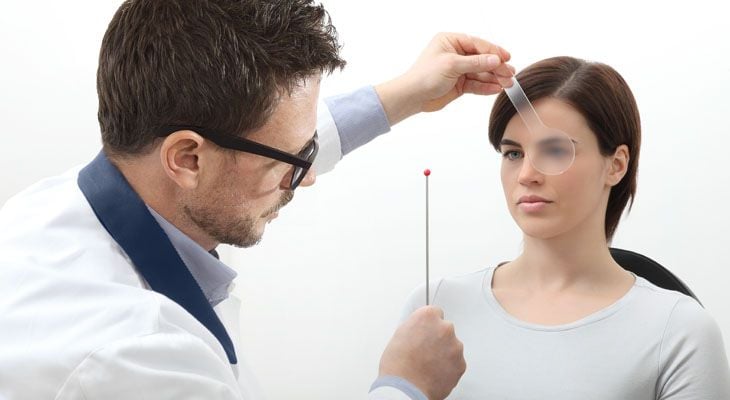
Optometrist examining patients eyes

Eye movement refers to the voluntary and involuntary movements of the eyes that assist with obtaining, fixating and following visual stimuli. The eyes are each connected to a system of six muscles. Light is sensed by the retina, which is a type of tissue that contains cells known as photoreceptors. These cells translate light into electrochemical signals that move along the optic nerve fibers to the brain. Once they reach the brain, the signals are interpreted as vision in the visual cortex and the brain applies meaning to what is being seen.

How Your Eyes Interpret Movement

And just as the eyes send signals to the brain, the brain sends signals to the eyes. Three cranial nerves transport signals from the brain to the muscles attached to each eye. This ultimately controls both voluntary and involuntary eye movements.

There are four types of eye movement:

  • Saccades – rapid, flying movements of the eyes that suddenly change the point of fixation. These movements range in scale from the tiny movements made while reading to greater movements made while scanning a room
  • Vergence movements – these movements bring into the line the area of the retina (fovea) designed for high perception
  • Smooth pursuit movements – steady tracking movements that are meant to keep moving stimulus in focus
  • Vestibulo-ocular movements – helps stabilize the eyes when the head’s position moves

Poor eye muscle control or injury/trauma can affect the eyes’ ability to move in harmony, leading to eye movement disorders like:

  • Nystagmus – fast, uncontrollable movements of the eyes. This can sometimes be referred to as dancing eyes
  • Strabismus – the eyes are misaligned and not aimed in the same direction. This may cause crossed eyes or other vision problems like lazy eye

Correcting Eye Movement Problems

If an individual has problems with eye movement, vision therapy is one treatment that can help by using vision exercises and specialized equipment to strengthen the eye muscles, leading to more fluid, cooperated eye movement.

Performed under the guidance of an optometrist, vision therapy is conducted in an office setting up to twice a week for an hour. The types of exercises and equipment will be tailored to meet the individual needs of the patient and are based on the severity of the eye movement problem, as well as any associated symptoms. These influences will also establish the number of sessions the patient requires. To accompany in-house visits, the optometrist may also instruct the patient on how to perform certain vision exercises at home.

Equipment that may be used during a vision therapy session includes:

  • Therapeutic or corrective lenses
  • Optical filters
  • Prisms
  • Occluders or eye patches
  • Balance boards
  • Computer software
  • Vision-motor-sensory training equipment
  • Electronic target with programmed apparatuses

When vision therapy is over, and all necessary sessions have concluded, the patient should be able to perform the four types of eye movement with greater ease and should be more efficient when it comes to processing and interpreting visual information.

  • Common Eye Conditions
    • Age-Related
    • Cognitive and Acquired
    • Vision Impairment
    • Injury & Irritation
    • Eye Lids
    • Changes in Appearance
  • Contact Lenses
  • Eye Diseases
  • Eyeglasses
    • Eyeglass Lenses
  • Eye Symptoms
  • How the Eyes Work
    • Basic Visual Skills
  • Pediatric Vision
  • Protecting Your Eyes
  • Visual Rehabilitation
  • Vision Problems
  • What is Vision Therapy
  • Vision Therapy Programs
  • We Can Help With
    • Cataracts
    • Corneal Disorders
      • Disorders
    • Glaucoma
    • Refractive Disorders
    • Adult Strabismus
    • Retinal Disorders
  • Newsletters
    • Glasses & Frames
    • Contacts
    • Tips for Healthy Eyes
    • Conditions That Affect Vision
    • Kid's Vision
    • Amazing, Interesting Eyes
    • Medical Perspectives

All patients receive 20% OFF on second complete pair of eye glasses.

Error!

    Featured Links

    Click to find out more

    • Services

      We strive to provide complete care for our patients. Learn more about all the services we provide.
    • Make An Appointment

      We will do our best to accommodate your busy schedule. Schedule an appointment today!
    • Online Forms

      Our patient forms are available online so they can be completed in the convenience of your own home or office.

    Hours of Operation

    Our Regular Schedule

    Monday:

    9:00 am-5:00 pm

    Tuesday:

    9:00 am-5:00 pm

    Wednesday:

    9:00 am-5:00 pm

    Thursday:

    9:00 am-5:00 pm

    Friday:

    9:00 am-5:00 pm

    Saturday:

    Closed

    Sunday:

    Closed

    Locations

    Find us on the map

    Testimonials

    Reviews From Our Satisfied Patients

      We use Anderson Optometry for all of our family’s vision needs. Recently, we had to have our youngest fitted for new glasses and he made the experience fun for her and informative for us. We know Dr. Anderson will always take good care of our family’s eye care and that’s why we wouldn’t go to anywhere else.

      The Harrison Family

      Dr. Anderson and his staff are so patient and friendly. Dr. Anderson prescribed me glasses and I had the toughest time picking out frames. They didn’t rush, but instead made helpful suggestions and now I have an awesome pair of frames, not to mention the fact that I can see ten times better than before. You guys are the best!

      Shelly

      I’ve been going to Dr. Anderson for over five years now and even though I only see him once a year for my annual exam, he and his staff always make me feel very welcome and take care of all my eye care needs. Anderson Optometry is the best at what they do and make you feel right at home.

      Anthony

    Featured Articles

    Read up on informative topics

      March Newsletter: Top Signs You Need to See an Optometrist

      Do you need to make an appointment with the eye doctor? ...

      Read More

      March Newsletter: How Dehydration Affects Your Eye Health

      Do you know how dehydration affects your eyes? ...

      Read More

      February Newsletter: How to Prepare for an Eye Exam

      Are you ready for your eye exam? ...

      Read More

      February Newsletter: What are Eye Floaters and When Should You Seek Treatment?

      Do you know when eye floaters need treatment? ...

      Read More

      January Newsletter: Why You Should Not Ignore Dry Eye Symptoms

      Are your eyes dry? Find out why you shouldn't overlook your symptoms. ...

      Read More

      January Newsletter: How the 20-20-20 Rule Can Reduce Eye Strain

      Struggling with eye strain? This simple rule can help. ...

      Read More

      December Newsletter: The Best Contact Lenses for Dry Eyes

      Need to find more comfortable contacts for your dry eyes? Take a look at these options. ...

      Read More

      December Newsletter: Daily Habits That Affect Your Vision

      Could your daily habits harm your eyesight? ...

      Read More

      November Newsletter: Why It's Important to Have an Extra Pair of Eyeglasses or Contact Lenses

      Do you have an extra pair of eyeglasses or contact lenses? ...

      Read More

      November Newsletter: The Advantages of Rimless Eyeglasses

      Are rimless eyeglasses right for you? ...

      Read More

    Newsletter Signup

    Sign up for more articles

    Error!

      Social Media

      • Copyright © 2026 MH Sub I, LLC dba iMatrix.
      • Admin Log In